Tuesday, April 6, 2021

Namak Mandi Peshawar, Pakistan Gems Market and gemstones export

 پاکستان میں جواہرات قدیم زمانے سے ہی پسند کیے جاتے رہے ہیں۔ موہنجوداڑو، ہڑپہ، گندھارا اور ٹیکسلا کی قدیم تہذیبوں نے زیورات اور سجاوٹ کے لیے جواہرات جیسے لاپیس لازولی، چالسیڈونی، کوارٹز، اسپنل اور زمرد کا استعمال کیا تھا۔ آج بھی پاکستان میں زمرد، یاقوت، اسپنل، پکھراج، ٹورمالائن، کروم ڈائیپسائیڈ، گارنیٹ، کنزائٹ، کوارٹز، اور زیور کے قیمتی پتھر جیسے نیفرائٹ، ریڈ ایگیٹس اور سرپینٹائن جیسے مختلف رنگوں اور رنگوں کے جواہرات تیار کیے جا رہے ہیں۔


پاکستان کے شمالی حصے اور افغانستان کے ملحقہ صوبوں میں دنیا کے 30 فیصد جواہرات کے ذخائر یہاں موجود ہیں۔ اس علاقے کی سائنسی طور پر تحقیق نہیں کی گئی ہے یعنی جواہرات کے ذخائر کے حوالے سے مناسب ارضیاتی نقشہ سازی کبھی نہیں کی گئی۔ اسی طرح کان کنی بھی نہ تو سائنسی بنیادوں پر ہو رہی ہے اور نہ ہی مشینی۔ تاہم، قیمتی پتھروں کو ایک سو سال سے زیادہ عرصے سے قدیم طریقوں سے نکالا جا رہا ہے۔ لاپیس لازولی کی تاریخ، جو صوبہ بدخشاں میں پائی جاتی ہے، پانچ ہزار سال قبل مسیح پرانی ہے۔ کلیوپیٹرا کے برتن اور قدیم مصریوں کے دیگر معززین لاپیس لازولی سے بنے تھے اور لاپیس کا منبع افغانستان تھا۔ اسی طرح کلیوپیٹرا اپنی پلکوں کو لاپیس کے نیلے رنگ سے سجاتی تھی۔

پاکستان کے چند مشہور قیمتی پتھر۔
زمرد، روبی، نیلم، زرقون، کوارٹز کی مختلف اقسام، روٹائل کوارٹز، ایکوامارائن، ٹورمالائن، اسفینی، اسپنل، زوسائٹ، اپیٹائٹ، ایپیڈوٹ، مورگنائٹ، گارنیٹ، اسکاپولائٹ، کلینو زوسائٹ، زینوٹائم، باسٹناسائٹ، ریڈیپائنٹ، ریڈینٹ Agate، Diopside، Pargasite، Topaz، Amethyst، Schheelite، Pollucite

تاریخ: پشاور، تہذیب کا گہوارہ، تقریباً 1000 کلومیٹر کے دائرے میں واقع علاقوں کا ثقافتی مرکز ہے۔ یہ شمال سے جنوب اور اس کے برعکس ایک صدی کے ٹرانزٹ روٹ کے لیے باقی ہے۔ پشاور نمک منڈی جواہرات کی منڈی اب بھی قیمتی پتھروں کی تجارت کا مرکز ہے۔ قدرتی طور پر، دیگر مصنوعات کے علاوہ، Gemstone یورپ اور امریکہ میں اپنی حتمی منزل پاتا ہے۔ ہنر مند مزدوروں کی عدم دستیابی کی وجہ سے زیادہ تر قیمتی پتھر کھردری شکل میں (بغیر ویلیو ایڈیشن کے) برآمد کیے جا رہے ہیں اس لیے جواہرات کے تاجروں کو جواہرات کی دولت میں ان کا جائز حصہ نہیں مل رہا تھا۔ یہاں تک کہ تیار شدہ مصنوعات بھی غیر معیاری تھیں اور انہیں پہلے سے تشکیل شدہ / پہلے سے بنائے گئے قیمتی پتھروں کے طور پر سمجھا جاتا تھا۔ ہندوستانی، تھائی اور مغرب میں قیمتی پتھروں کے ڈیلرز پاک افغان قیمتی پتھروں کے حقیقی مستفید تھے۔

صنعت: پاکستان میں جواہرات کی پہلی کان 1951 میں گلگت کے ہراموش رینج میں دریافت ہوئی تھی۔ 1979 میں، Gemstones Corporation of Pakistan کا قیام 1978 میں وزارت پیٹرولیم اور قدرتی وسائل کے انتظامی کنٹرول میں قیمتی پتھروں کے شعبے کی ترقی کے لیے کیا گیا تھا۔ کارپوریشن کو ختم کر دیا گیا اور نجی شعبے کو اس شعبے میں سرمایہ کاری کرنے کی ترغیب دی گئی۔

اب اس شعبے میں متعدد تنظیمیں کام کر رہی ہیں جن میں جیمز اینڈ جیمولوجیکل انسٹی ٹیوٹ آف پاکستان (جی جی آئی پی) صدر پشاور میں ہے۔ جی جی آئی پی کے مقاصد جواہرات کے پتھروں کے شعبے سے وابستہ کاروباری برادری اور نئے آنے والوں کو شناخت کے جدید ترین طریقوں، قدر میں اضافے اور کٹنگ اور پالش کرنے کی جدید تکنیکوں

کو متعارف کرانا ہے۔

 جیمز اینڈ جیمولوجیکل انسٹی ٹیوٹ آف پاکستان (جی جی آئی پی)  کے مقاصد مندرجہ ذیل خدشات کے شعبوں کو فائدہ پہنچانے پر مرکوز ہیں:

1. خواتین کی ترقی۔
2. خود روزگار کے زیادہ سے زیادہ مواقع پیدا کرکے غربت کے تناسب کو کم کرنا۔
3. پاکستان کے جواہرات کی برآمدات پر فخر کرنا۔
4. مقامی قیمتی پتھروں کے ڈیلروں کو Gemology کے جدید علم سے آراستہ کریں۔
5. منی کاٹنے کی صنعت کے لیے ہنر مند لیبر فورس تیار کرنا۔
6. پاکستان کے جواہرات کے شعبے کو فروغ دیں۔
7. ہمارے جواہر کی دولت سے زیادہ سے زیادہ فوائد حاصل کریں۔
8. خود روزگار کے مواقع پیدا کریں۔
9. ضیاع کو کم کرنا اور نکالے گئے جواہرات کے معیار کو بہتر بنانا۔

 قیمتی پتھر کی صنعت کی ترقی کے لیے کام کرنے والی دوسری تنظیم
آل پاکستان کمرشل ایکسپورٹرز ایسوسی ایشن آف رف ان پالش شدہ قیمتی اور نیم قیمتی پتھر (APCEA)۔
ٹریڈ ڈویلپمنٹ اتھارٹی آف پاکستان-TDAP (وزارت تجارت و تجارت)
چھوٹے اور درمیانے درجے کے انٹرپرائزز ڈویلپمنٹ اتھارٹی - (SMEDA)
    
اس وقت صنعت سے 30,000 سے زائد لوگ وابستہ ہیں اور 1800 برآمد کنندگان کے طور پر رجسٹرڈ
ہیں۔ قیمتی پتھروں کو کاٹنے اور پالش کرنے میں لگ بھگ 500 یونٹس شامل ہیں۔ قیمتی
پتھر کے زیادہ تر پروسیسرز نمک منڈی، پشاور میں کلسٹرڈ ہیں، چھوٹے کلسٹرز کراچی،
راولپنڈی، لاہور اور کوئٹہ میں ہیں۔
جواہرات کی منڈی: 

پاکستان خصوصاً خیبر پختونخواہ (کے پی کے) رسمی طور پر شمال مغربی سرحدی صوبہ (این ڈبلیو ایف پی) قیمتی پتھروں کے قدرتی وسائل سے بھرا ہوا ہے۔ مینگورہ، مالاکنڈ (سوات)، چترال، دیر، مردان (کاٹلنگ) اور وادی کاغان کے علاقوں میں مختلف قسم کے قیمتی پتھر پائے جاتے ہیں۔ کے پی کے کے لوگ قیمتی پتھروں کے کاروبار سے وابستہ ہیں۔ پشاور نمک منڈی قیمتی پتھروں کی تجارت کا مرکز ہے۔ افغانستان کی سرحد کے ساتھ طویل اور غیر محفوظ سرحد کی وجہ سے، ملک کے بہت سے قیمتی پتھر اب نمک منڈی کے جواہرات کی منڈی میں بھی پائے جاتے ہیں۔ نمک منڈی منی مارکیٹ پشاور پاکستان اور افغانستان دونوں میں پائے جانے والے تمام جواہرات کی واحد براہ راست مارکیٹ ہے۔

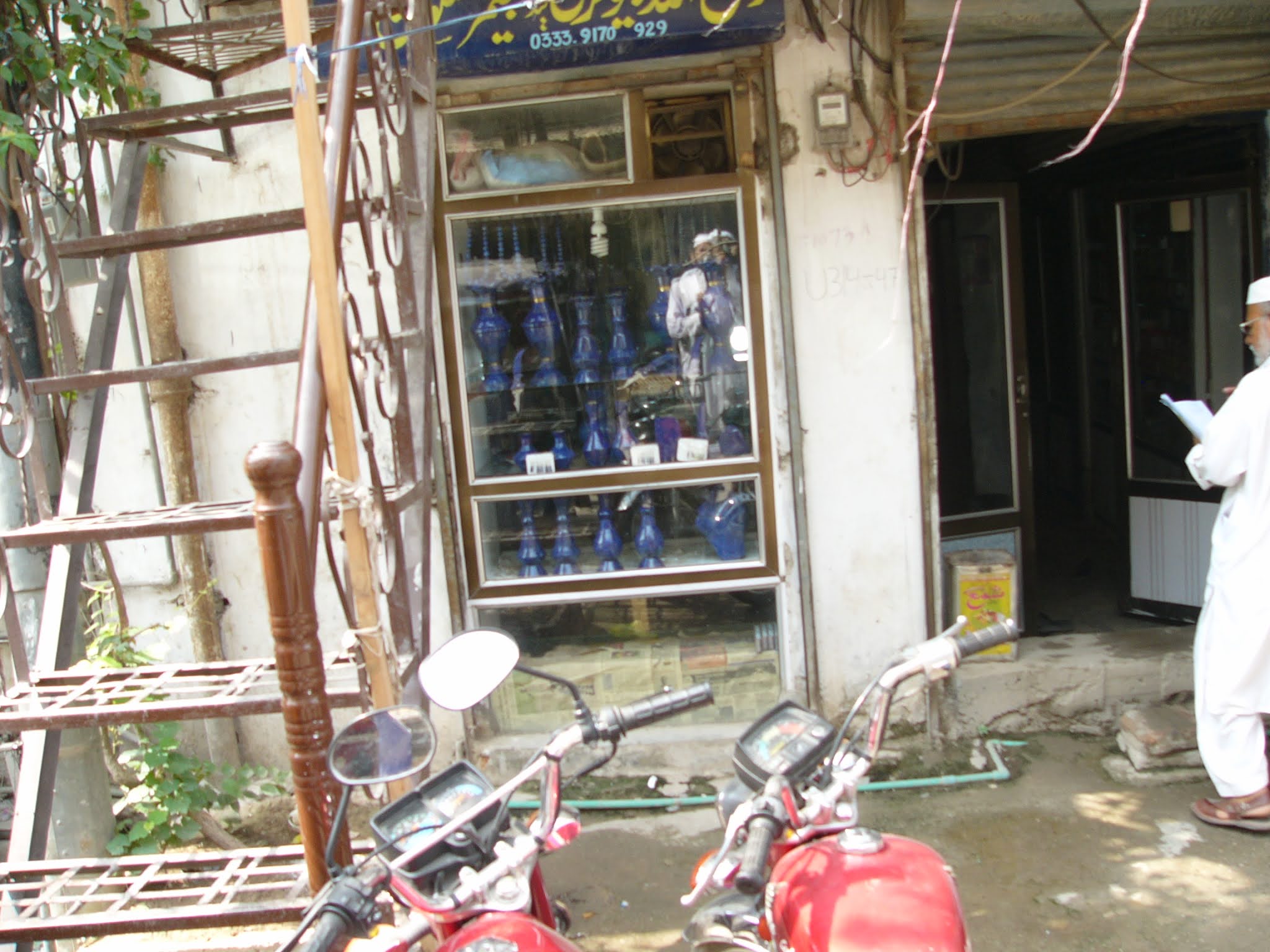
Shah Qabool Street which is the main street in Namak Mandi

over view of Namak Mandi Gem Market 

Namak Mandi is the too much-congested market which is also a Hurdle in the gemstones business promotion.
It is the need of the day to transfer this market to an open area. 


Lapis Lazul in namak mandi gem market


Peshawari People favorite Beverage, Tea shop
جواہرات کی برآمد: موجودہ قیمتی پتھر کی برآمدی قدراگلے پانچ سالوں میں متوقع قدر میں اضافہ
رسمی: 3.6 ملین امریکی ڈالر (25 فیصد)
غیر رسمی: 6.4 ملین امریکی ڈالر (75 فیصد)
کل: US$10m
  US$100 ملین @ 10 گنا ویلیو ایڈیشن

s  source: UNSTATS, SWOG estimates

مسائل کا سامنا:
 امن و امان کی صورتحال: نائن الیون کے بعد خاص طور پر کے پی کے میں امن و امان ک
ی صورتحال کی وجہ سے زیادہ تر غیر ملکی قیمتی جواہرات کے ڈیلرز ڈرتے
 ہیں اور نمک منڈی جیمز مارکیٹ، پشاور سے دور رہتے ہیں۔ گاہک پشاور نہیں
 آنا چاہتے کیونکہ انہیں اپنی جان کا خوف ہے۔
 
      لوگوں کا رویہ/تعلیم کا رساو:
 جواہرات کی پروسیسنگ میں مصروف کاریگروں کی مہارت کی سطح مکمل
 طور پر ان کے تجربے اور اس بات پر ہے کہ انہوں نے اپنے خاندانوں سے
 کیا سیکھا ہے، جے پور، ہندوستان سے آنے والے اہم تارکین وطن۔ یہ مقامی 
کاریگر جدید ترین ٹیکنالوجی اور بین الاقوامی معیار کے معیار سے ناواقف
 ہیں۔ بین الاقوامی منڈیوں تک پہنچنے کے بعد زیادہ تر پتھر دوبارہ کاٹے جاتے
 ہیں۔ وہ اپنے خاندانی پس منظر کی وجہ سے قیمتی پتھروں کو کاٹنے اور پالش
 کرنے میں استعمال ہونے والی جدید ترین تکنیک کو اپنانا نہیں چاہتے۔
جیمولوجی
اور لیپیڈری کی تربیت جیمز اینڈ جیمولوجیکل انسٹی ٹیوٹ آف پاکستان پشاو
ر میں دی جا رہی ہے۔ تجربہ کار ڈیلرز نے انسٹی ٹیوٹ کے محدود وسائل
  پر تشویش کا اظہار کیا ہے

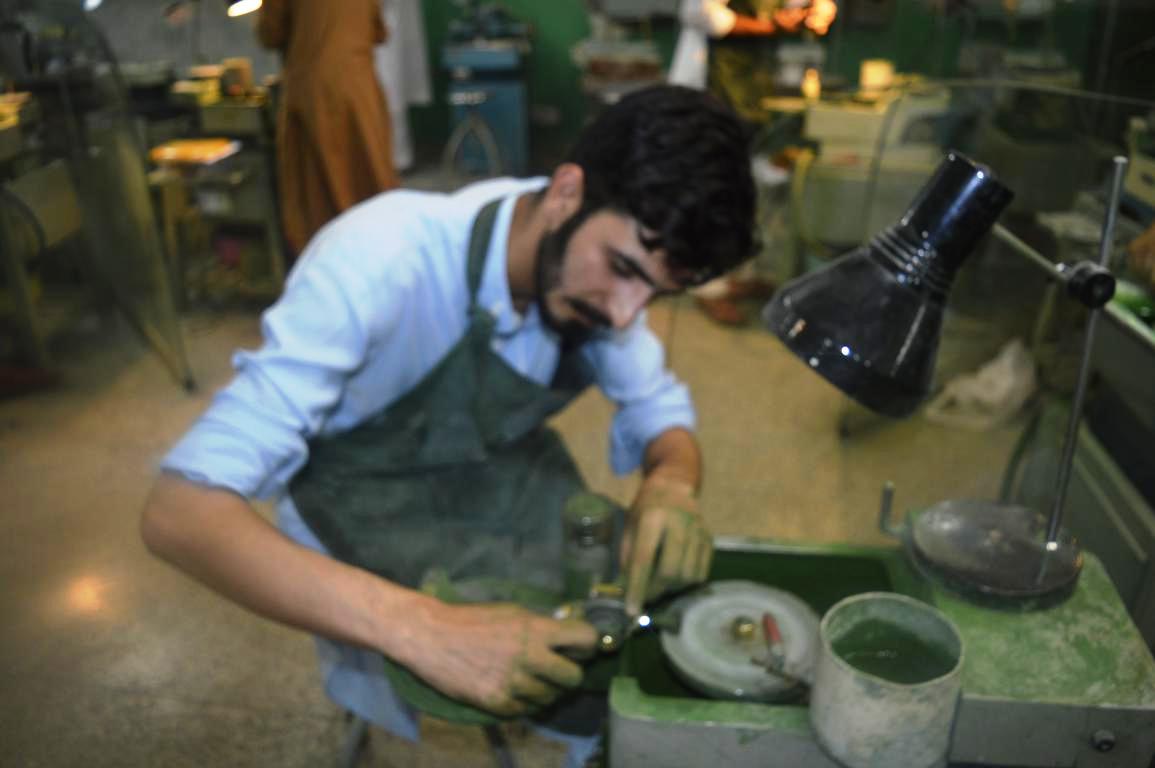
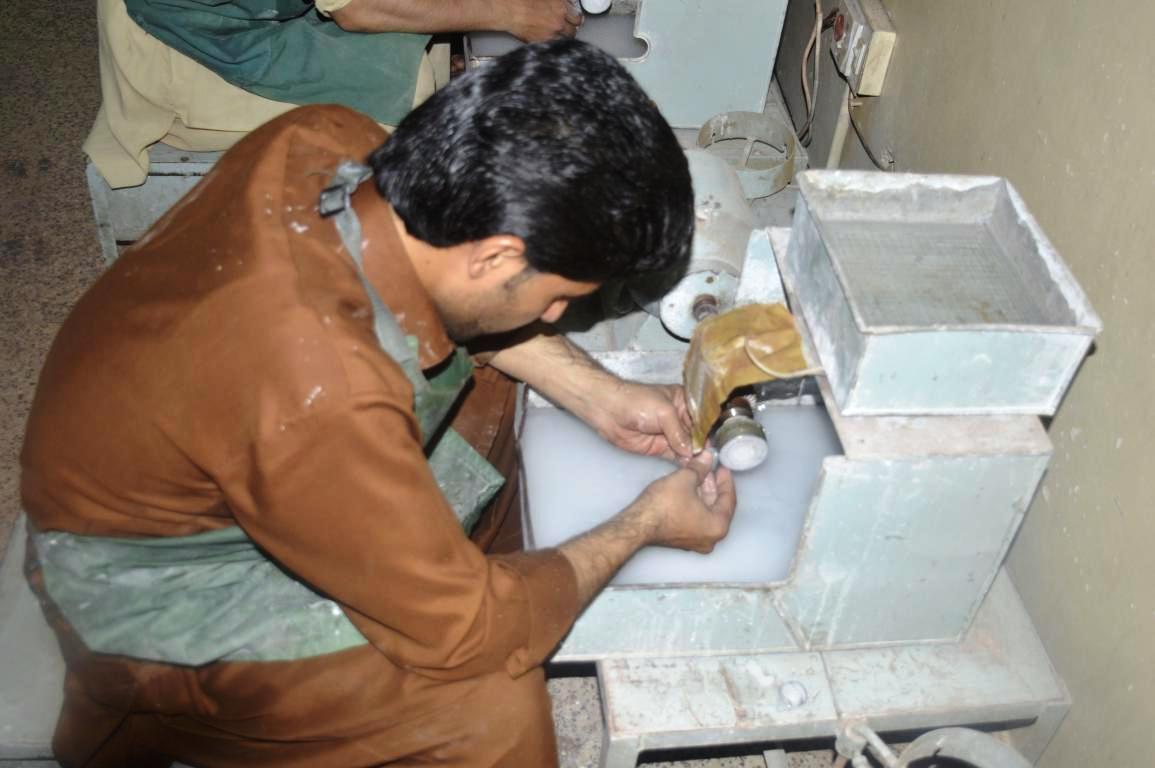
Traditional cutting in namak mandi 

Gemstone carving in progress

Gemstone faceting in progress with traditional techniques 
کھردرے/غیر کٹے ہوئے پتھر کی برآمد:
 پاکستان جواہرات کی برآمد سے زرمبادلہ کا مطلوبہ ہدف حاصل نہیں کر سکا
 کیونکہ ان میں سے زیادہ تر پتھر کھردرے/کچے/غیر کٹے ہوئے شکل میں بر
آمد کیے جاتے ہیں۔


Monday, April 5, 2021

Gemstones Reports / Certificates types and their descriptions


Gemstones Identification reports can be divided in the following different categories

  1. Brief Reports This is usually the least priced sort of report/certificate available. These will provide you with the fundamentals of the stone examined, such as the stone type, weight, size, shape, clarity, and colour. There may be a comment area as well. The treatments the stone has had are unlikely to be included in the short report. However, they will almost always include heating/treatments for sapphires and rubies. The report will be packaged in a plastic cover the size of a credit card.


  1. Brief Report with PhotoThese will have all of the information from the basic brief report, as well as an image of the stone being verified on the report itself, rather than on a separate sheet.Some laboratories that produce these studies are EMIL of Japan and AIGS. They do have certain limitations on the stones they will test. They don't test quartz variations very often.

3.   Standard Reports - These reports are packaged in a sealed card / envelope with the gemstone inside. On the reverse, there is a plastic cover that allows you to see the stone. These reports include the following information: kind of stone, weight, cut, size/measurements, colour, and a comment area. Sapphire and ruby treatments are often indicated in the remark section.

4.   Full Gemstone Report - This report is in card form, printed on original paper, laminated for preservation, and includes the gemologist's signature. This report will include the following information: the kind of stone, description, size, shape, weight, colour, clarity, proportion, finish grade, refractive index, specific gravity, variety & trade name, any treatments, and a photo of the gemstone.

5.  Origin Certificate: On request and under favourable conditions, certain laboratories will additionally provide their judgement on the gemstone's geographic origin.

Note: Some laboratories accept all sorts of stones, whereas others, such as Quartz or Pearl, have limits.

Gemstone of Pakistan from Mine to Market


Gem Sector Development

Most mountain communities have natural access to semi precious and precious stone mines, but they lack the skills and resources to develop them into sustainable income generating opportunities. Rupani Foundation, since its inception, is making a purposeful strive to alleviate poverty through imparting marketable skills focusing on the marginalized segment of the society. By adopting a holistic approach, mine to market, RF has intervened in a much needed sub sector of gems cutting and polishing along the value chain of gems sector. To date, a sizable critical mass has been developed in gems cutting, polishing, stone carving and sculpture making. These graduates are now working as supervisors, workers, and many are self-employed. RF is continuously putting its efforts into developing a vibrant gems sector in the already fragile environment of Gilgit Baltistan by filling the gaps along the value chain. Availability of raw material in the form of precious and semi-precious stones at the doorstep with a developed human resource base are some of the encouraging factors leading towards the development of a cottage industry in the region.

Mine to Market

Gemstones and minerals have been mined in the mountainous region of Pakistan, Afghanistan, and Tajikistan for nearly 40 years. The mountainous regions are geologically active areas that are advantageous in locating gem and mineral deposits. Rupani Foundation's initiative in the establishment of the Gem Cutting and Polishing Training Centers gives local residents a chance to be involved in not only the mining of gemstones, but also producing a finished product which has a higher resale value. Rupani Foundation provides the necessary support for the establishment of the required infrastructure to develop the Mine-to-Market program for precious gemstones. The objective is to enhance the skills of the local people in mountain communities in professional mining, processing and value addition, standardization and certification, packaging, branding and promotion. These skills will increase market access through links with international auction centers and through participation in major trade expo events. Aga Khan Rural Support Programme (AKRSP) and Karakoram Area Development Organization (KADO) are two of the many local organizations who partner with us in this endeavor.

Accomplishments:

  • In partnership with AKRSP and KADO, the six training centers in Pakistan have graduated over 360 students by 2009
  • In Afghanistan, eight training centers have been established in Afghanistan with capacity to graduate over 500 students annually, two of which also handle jewelry production supported by Aga Khan Foundation and GTZ.
  • Provided graduates with joint instruction classes in higher skill sets, including master training and production
  • Executed MoUs with local partners to establish a line of production units at all training centers in Pakistan in 2009
  • KADO has started production on commercial basis involving 25 trainees who receive 80% of the income
  • 29 Male Trainees and 2 Female Trainees have started their own businesses.

Gemstones exports from Pakistan


Pakistan has exported a variety of precious and semi precious Gemstones US$. 3.93 million worth during the last two years, official sources said.

Answering a question, the sources informed that different varieties of minerals like Ruby, Sapphire, Emerald, Peridot, Aquamarine, Morganite, Ghoshnite, Topaz in different colors of colorless, pink, golden and champagne, Ruby, Emerald, apatite,  rare-earth minerals bastnasite , Xenotime, Sphene, Tourmaline, Different verity of Quartz and different type of metals for example Gold, Silver, Copper, hematite, antimony lead Zink, Iron, and many type of ores are make the country prominent in the mineral world.

The northern and northwestern parts of the country are shrouded by the three world-famous mountain ranges called Hindukush, Himalaya, and Karakorum, from where nearly all the minerals, which Pakistan is currently offering to the world market, have been found so far.

The sources said out of 25 precious and semi precious stones and mineral specimens, seven were intermittently exploited and marketed all over the world.

United States, China, United Arab Emirates, Germany, Hong Kong, United Kingdom, Canada, France, Thailand and Saudi Arabia are the top ten countries where precious stones have been exported during the three-year period.

They said the government was making efforts to promote the gemstone industry so that the country's vast potential of glittering gemstones could be exploited in a professional manner.

Pakistan, based on its potential in mineral wealth, can become a great hub of the gemstone industry, on a scale comparable to that of Brazil, provided it takes a few essential steps to enhance the exploration of resources and growth of gemstone business.


Gems and Jewellery sector has global importance in the world. This sector is divided into two categories Gold, non-monetary (excluding gold ores and concentrates) and Jewellery, goldsmiths' and silversmiths' wares, and other articles of precious or semiprecious materials, n.e.s. The top five exporters of Gold, non-monetary (excluding gold ores and concentrates), the largest exporter of Gold, non-monetary (excluding gold ores and concentrates) was United States of America which export about $ 5,543 million, followed by Australia ( $4,442 million), Canada ($3,701 million), Peru ($ 3,072 million) and China ($ 2,803 million) in 2005. While the world's largest exporter of Jewellery, goldsmiths' and silversmiths' wares, and other articles of precious or semiprecious materials, n.e.s was Italy which export of worth $ 5,039 million, followed by United States of America ($ 4,359 million), Hong Kong Special Administrative Region of China ($ 4,275 million), India ($ 3,821 million and China ($ 2,826 million) in 2005.

OVERVIEW OF PAKISTAN'S GEMS AND JEWELLERY SECTOR:

Pakistan is a country with a rich tradition of craftsmanship in jewellry manufacturing. Skilled/semi-skilled labour force is available at relatively lower rates, which offers a comparative advantage to the country. Their skill enhancement through training would lead to greater competitiveness. Pakistan has been gifted with abundant resources of several precious and semi-precious gemstones, at present mostly found in Northern Areas and NWFP, but with a huge future potential in Balochistan. Most important of the currently found stones are emeralds of Mingora (Swat), pink and golden topaz of Katlang (Mardan) and aquamarine of Chitral and Neelam Valley. At present, there is no final survey available to identify the geological resources of gemstones in the country. Furthermore, due to lack of realization of its importance as an industry, those who are engaged in the mining, cutting/polishing and trading of gemstones in Pakistan have not been able to exploit the full potential of this sector.

The first gemstone mine in Pakistan was discovered in 1951, in the Haramosh Range in Gilgit. But it took no less than 27 years for the establishment of Gemstones Corporation of Pakistan (GEMCP), under the administrative control of Ministry of Petroleum & Natural Resources, in 1978. GEMCP was responsible for exploring, mining, auctioning and exports of gemstones. Within 15 years of its establishment, GEMCP was disbanded in 1993-94 and private sector was encouraged to invest in the sector. The impact of privatization proved to be positive, as exports of gemstones have risen since then, albeit slightly. In 2003, the total value of gemstones export was worth US$4 million. Factors including lack of appropriate skills, vested interest, regulatory bottlenecks, technological limitation and so forth, have been responsible for hindering the efforts of new investors to make any significant progress in this regard.

Likewise, the Free Trade regime in addition of removal of international barriers is posing a great threat to the highly fragmented market of Pakistan gem a jewelry sector, being denied of gold loans by banks, is operating with the lack of training facilities besides the lack of standardization and quality assurance.

The industry experts said that the country had not been given its jewelry sector any kind of financial help from any of the banks or financial institutions. The experts termed the delay in establishment for jewelry exports an expensive mistake.

EXPORT OF GEMS AND JEWELLERY IN MILLION US $:

Pakistan export two categories of Gems sector which are Precious & Semi Precious Gemstones major export share of Gems sector was gone to rough stone as minerals specimens. Export from Pakistan of Precious & Semi Precious Gemstones was US$ 3.93 million recorded in the fiscal years 2015 to 2016  Although, the volume of exports of Gemstone from Pakistan is of no great significance in the total global trade of US$84.4 billion but the growth potential of exports in the sector is huge.

REASONS DUE TO WHICH THIS INDUSTRY IS NOT FLOURISHED:

* One of the main hindrances in the development of this is the lack of it being recognized as an industry due to which none of the banks and financial institutions support.

*There was a dearth of skilled, semi-skilled and relatively cheap labour available in Pakistan. The Gems Cutting & Polishing  trade in Pakistan involves a large turnover of Gemstone  worth in millions of dollars, but the drawback is that the Gems industry still relies on traditional designs which can only satisfy the local demand of consumers in Pakistan.

*A major handicap to the development of Gems cutting & Polished  products for exports from Pakistan is the lack of facilities for training of manpower in capacity building, quality assurance, standardization and marketing management. The Pakistani manufacturing industry if continues to stagnate will eventually decline as it will fail to compete with Asian countries (Thailand, Hong Kong and India) and European countries in its domestic market when trade barriers are removed.


SUGGESTIONS AND RECOMMENDATIONS OF GEMOLOGICAL ASSOCIATION  OF PAKISTAN (GAP):

1,  Gemstone industry should be given a boost by introducing Pakistani stones in the      international markets through meaningful participation in international gem shows. The exhibitors should be encouraged to bring out the best gems and put them on display keeping in view the expectations of the consumers. The stones in the exhibitors should show the richness of the area.

2,  The Gemstone industry should be announced at zero rated industry, as it is export- based   industry.

3,  Incentives for Exploration, Mining, Cutting and Polishing of Gemstones for Export on Scientific lines are required to be rationalized at par with the Neighboring Gems producing countries.

4,  The Gems industry should be given loans to the nominal mark up.

5,  Gemstone industry should be given a boost by introducing Pakistani stones in the international markets through meaningful participation in international gem shows. The exhibitors should be encouraged to bring out the best gems and put them on display keeping in view the expectations of the consumers. The stones in the exhibitors should show the richness of the area.

6,  Holding special displays in major markets like USA, UK, Switzerland, Thailand, Sri Lanka and India can be an important source not only of introducing but also establishing the credibility of Pakistani stones in international markets.

7, To be competitive in the global market, soft loans and ready financing were essential, making a tremendous difference to the industry if Gems Cutter fabrication was recognized as a priority sector by banks.

ROLE OF GOVERNMENT:

*Government is focusing on the development of gems and jewelry sector and plans to enhance its exports from $21 million to $500 million through skill development, market access and tapping its rich potentials in the country.

*Pakistan offers a lot of potential of foreign investment in Gems and Precious Stones Sector which can be exploited by Thai investors. Pakistan government was giving equal treatment to foreign and local companies. Government was not only upgrading the mine sector but also focusing on the training for cutting, polishing of the precious stones in order to develop this sector.

*Government was committed to untapped the natural resources especially gems of the country and in this regard it had taken numerous steps and established  Gems & Gemological institute of Peshawar Pakistan (GGIP) Under supervision of TDAP Ministry of Commerce with the aim to develop this sector. Pakistan has a market of 160 million people with rich natural resources including gems and Jewelry and urged the investors to take benefit from it. This sector requires proper training, management and marketing for the development of Gems and Jewelry sector.

*Initiatives taken by the government to upgrade this sector and Government has also established training institutes for the development of the Gems sector and invited master trainers from Thailand to share its knowledge and experience with Pakistan for the mutual benefit of the two countries. Pakistan has rich natural resources especially gems and assured that TGJMA would extend its all possible support and technical assistance to Pakistan for the development of this sector. Thai experts could train Pakistanis for proper cutting, polishing and marketing of the Gems and Jewelry sector of Pakistan and its exports to international markets.

PACKAGE FOR GEMS AND JEWELLERY SECTOR:

By considering that Gems sector have considerable export potential. Therefore it is decided to announce the following package to facilitate this sector.

ii. Presently a Valuation Committee is functioning for the clearance of Gems and jewelry before export. The procedures involved were retarding the growth of exports of this sector. It has therefore been decided to abolish the Valuation Committee.

iii. A scheme, in consultation with State bank, Pakistan Bankers Associations, commercial banks and jewelry exporters is being developed whereby exporters will import gold by utilizing financing from private banks under a collateral arrangement acceptable to commercial banks and jewelry exporters. Non availability of running finance has been a major problem in the growth of this industry.

iv. It has been decided to declare this sector as an industry so that they have easy access to credit and have advantage in utility rates and taxes.


Sunday, April 4, 2021

Gems and Gemological institute of Pakistan, Peshawar, A success story

If you look at the map of the northern part of Pakistan and adjacent provinces of Afghanistan, 30% of the world's gem deposits are located here. The area is not explored scientifically i.e. proper geological mapping with reference to gem deposits has never been carried out. In the same way, mining is also not on scientific grounds and mechanized. However, gemstones are being mined out by primitive methods for more than one hundred years. History of lapis lazuli, found in Badakhshan province, goes back to five thousand B.C. utensils of Cleopatra, other dignities of ancient Egyptians were made of lapis lazuli, and the source of Lapis was Afghanistan. In the same way Cleopatra used to adore her eyelids with the blue color of Lapis Lazuli.

          Peshawar, cradle of civilization is the cultural center of the areas approximately 1000 km in radius. It has remained for centuries the transit route of caravans traveling from north to south and vice versa. Qissa Bhawani bazaar (bazaar of storytellers) reminds one of those times. Modern days Peshawar, going through an era of pains, is still the center of trades like dry fruit, herbal medicines, gemstones, and carpets. Peshawarittes and Afghans though like to use low-priced gemstones and adore their drawing rooms and kehwah khanas (green tea houses) with carpets but prefer to make money when it comes to high priced carpets and gemstones. Naturally, these two products find their ultimate destination in Europe and America. Carpets are finished and value-added products but the export of gemstones was mostly in rough form (without value addition). For the first time Gemstone, The corporation of Pakistan (defunct) put things in the right direction as far as gemstones are concerned. After Gemstone Corporation was dissolved, the gem trade was directionless. The mine owners, the miners, and the gemstone traders were not getting their due share of gem wealth, as the export was mostly not in finished form. Even the finished products were sub-standard and treated as pre-shaped/pre-formed. Indians, Thais, and gemstone dealers in the west were the real beneficiaries of Pak-Afghan gemstones. Keeping this in view, the Ministry of Commerce, Govt of Pakistan launched a project named Gems and Gemological Institute of Pakistan, Peshawar (GGIP). The purpose of GGIP was to equip local gemstone dealers with modern knowledge of gemology and produce a skilled labor force for the gem cutting industry.

          In October 2001, GGIP was established in rented premises; under the umbrella of the private sector i.e. All Pakistan Commercial Exporters Associations (APCEA).

The objectives of GGIP are to introduce sophisticated methods of identification, value addition, and modern cutting & polishing techniques to the business community involved in the gems stones sector and newcomers. Aims of GGIP are focused to give benefits to the following areas of concerns:


1.     Women Development.

2.     To reduce the poverty ratio by creating maximum self-employment opportunities.

3.     Boasting Gems Exports of Pakistan.

4.     Equip local Gemstone dealers with modern knowledge of Gemology.

5.     To produce a skilled labor force for the gem cutting industry.

6.     Promote the Gems Sector of Pakistan.

7.     Get maximum benefits of our gem's wealth.

8.     Generate self-employment opportunities.

9.     To reduce wastage and improve the quality of extracted gems.

 Three types of courses were designed with the help of professors of the department of geology, the University of Peshawar, and leading gemstone cutters and exporters. These courses are following:-


1.   Basic Gemology

It is a two-month course. All the gemstone found in Pakistan and Afghanistan are taught. Every theory is supported by practical. The difference between natural and synthetic stones is highlighted. In addition to scientific knowledge. Lectures on marketing, development of small and medium enterprises, and export procedures are delivered. At the end of the two-month course, passed-out graduates are ready to join the advanced courses in gemology.


2.   Gem cutting, faceting

The faceting course is four-month duration. Training is given on transparent quartz, which is available on the local market. During four months, students are trained in 30 types of cuts.

Gemology- Faceting Course Descriptions


GGIP student busy in gemstone faceting 

GGIP student busy in gemstone faceting


3.   Gemstone cutting, carving

Opaque and translucent stones which can not be cut like transparent stones need to be carved in different shapes like figures, beads, jewelry items, sculptures etc. training period of this course is again four months.

Gemology-Carving Course Descriptions


GGIP student busy in gemstone Carving

GGIP student busy in gemstone Carving

GGIP student busy in gemstone Carving


Gems & Gemological Institute of Pakistan- Peshawar Admission form 


Gems & Gemological Institute of Pakistan Address & official landline &  Fax numbers:

Gems & Gemological Institute of Pakistan (GGIP)-Peshawar.
Address: Suite # 209, 1st Floor, Benevolent Fund Building, Sadder Road, Peshawar - Khyber Pakhtoonkhwa – Pakistan
Phone: (+92-91) 9213303, 9213196, 9213197
Fax: (+92-91) 9213198 , Email: ggip.eshawar@gmail.com
Website: http://www.ggip.com.pk/

Location on google map


Saturday, April 3, 2021

The Real Smiling Rocks (laughing Stones) or The real natural weird stuff 👄☺☺☺☺☺☺☺☺☺☺☺☺☺☺☺☺

Bizarre Natural Rocks


Nature is full of wonder and some we faced or see strange things which cannot be ignored. For example, sometimes we see the shapes of the fruits resemble lady or man or baby or smile faces. 

The same also can exist in rocks. Recently I found some rocks which is resemble smiling faces (laughing faces). 

These smiles clearly message us that treat well to everyone.


The Real Smiling Rocks (laughing Stones)  or The real natural weird stuff
Natural smiling face in rock

The Real Smiling Rocks (laughing Stones)  or The real natural weird stuff
 
Natural smiling face in rock

You know about the "sub sandwich" or "crispy chicken sandwich" and you must have eaten.  but you may not have seen natural stones (rocks) in the form of sandwich.You will be amazed if you see natural stones (rocks) in the form of sandwich.
 Following pictures of the rock which is  resemble to sandwich 

                   Sandwich Type rock

                  Sandwich Type Rock


                Sandwich Type Rock


If someone interesting to purchase these rocks please contact me at my email address
aggemologist@gmail.com


Thursday, April 1, 2021

Afghanite, The mineral afghanite information , pictures and stuff available for selling ib ebay store


Afghanite is an aluminum silicate mineral, a feldspathoid that typically occurs with sodalite group minerals. It forms blue to colorless crystals, typically massive, and has a Mohs hardness of 5.5 to 6. Discovered in 1968 in Afghanistan in the Lapis-lazuli Mine, Sar-e-Sang, Badakhshan Province, Afghanistan, it takes its name from that country. It has also been found in Germany, Italy, Tajikistan, Russia, Newfoundland and the United States. This rare gem is a transparent light blue color, weighs 0.6ct, and is the first afghanite in the National Gem Collection.

Visit my ebay store where you will find beautiful vivid color afghanite uncut lot.

Afghanite rough lot on ebay

Afghanite rough lot 

139 carat Afghanite lot


­­­

Introduction quiz

💎 Gemology Quiz 1. What does gemology study? The study of rocks only The study of gemstones and their p...